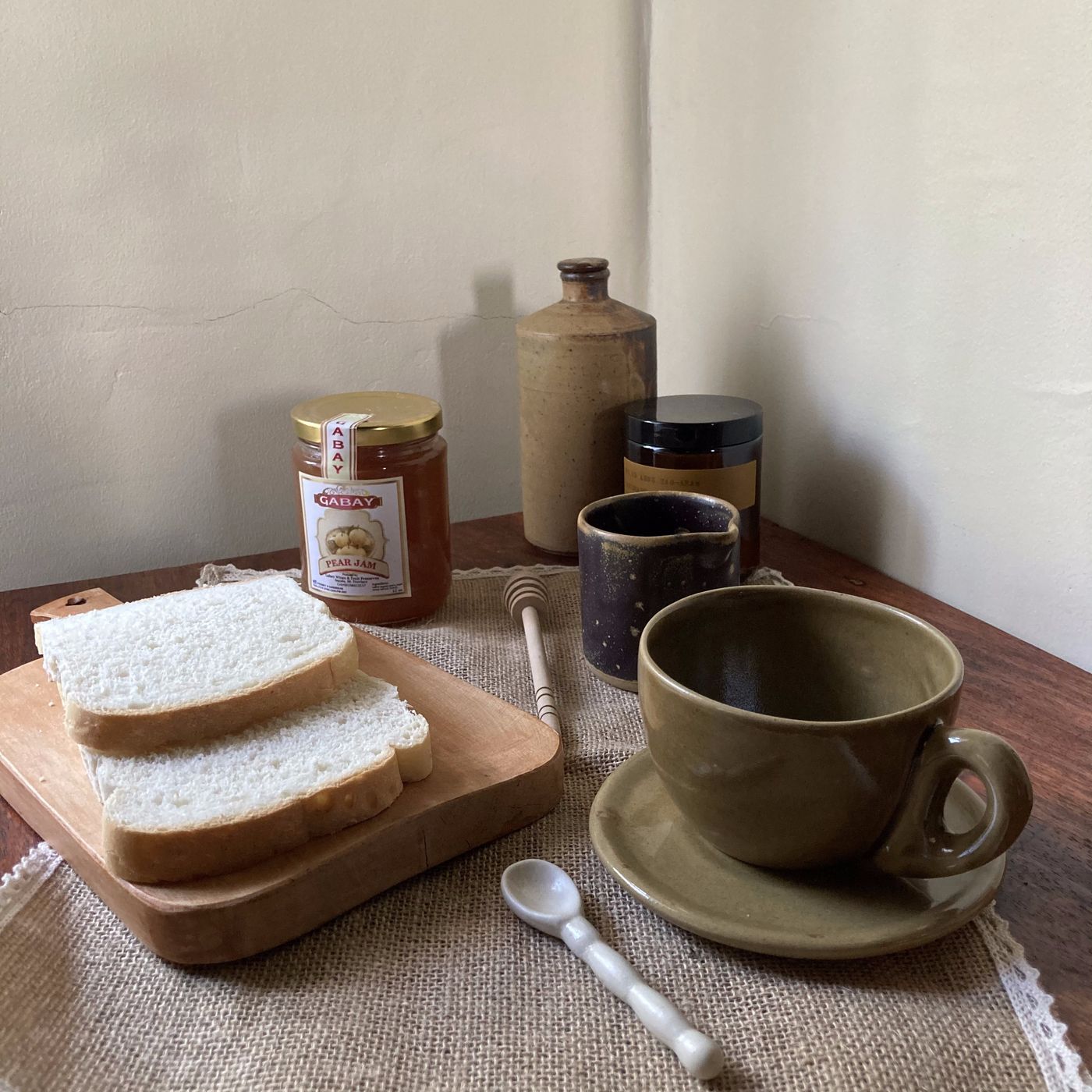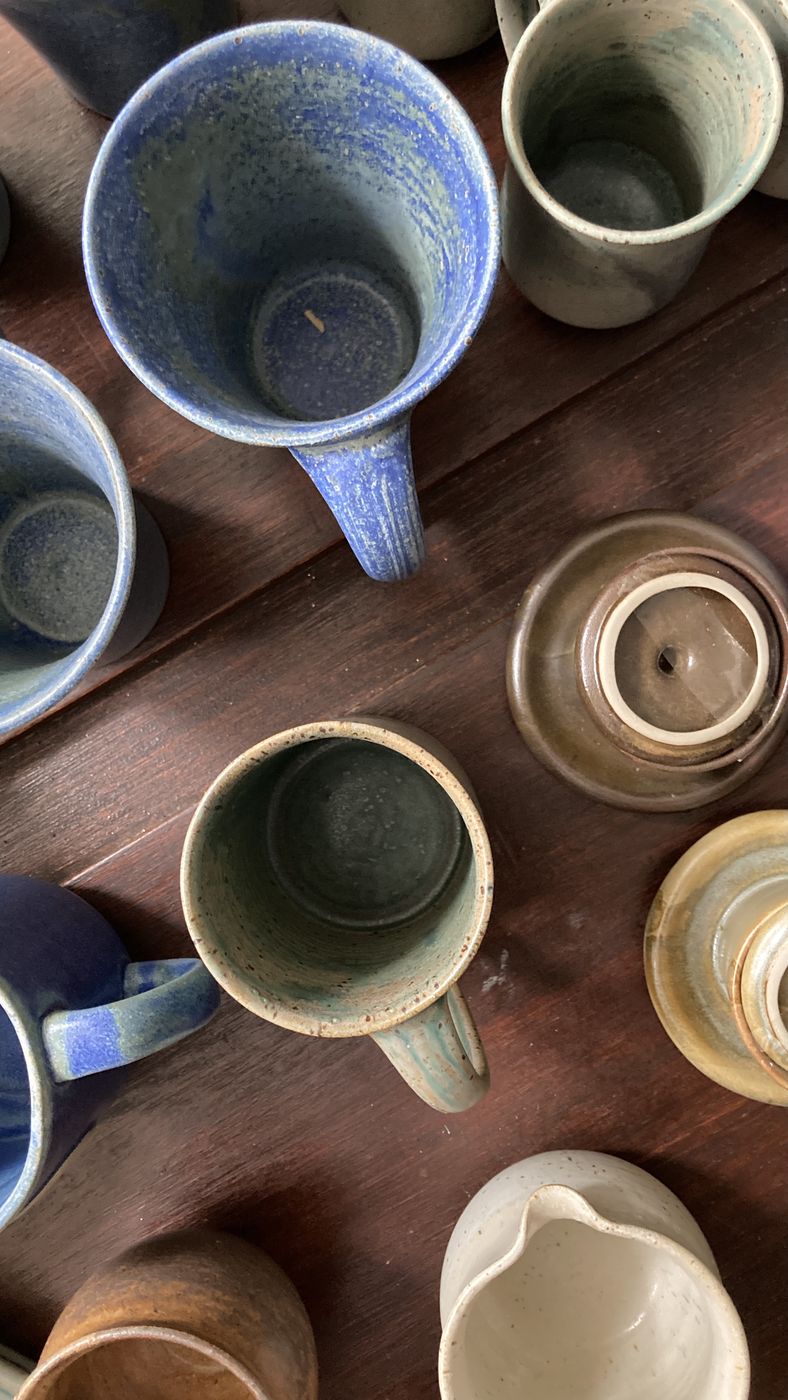
Stoneware is fired hard. It does not need careful handling so much as a few habits.
Washing
A soft sponge and warm water is enough. Avoid abrasive pads on matte glazes, which will dull the surface over time.
Vitrified stoneware tolerates a dishwasher. If a piece is washed by machine often, expect the unglazed foot to lighten slightly with age.
The foot
The ring a piece stands on is usually left unglazed so it does not fuse to the kiln shelf. That bare clay holds water after washing.
Let it dry fully before stacking. A stack put away damp will hold a faint ring on the piece beneath it.
Heat
Sudden temperature change is the one real risk. Moving a piece from the refrigerator into a hot oven, or pouring boiling water into a cold cup, puts the body under stress it was not made for.
Warm a piece gradually and it will not mind.
Small variations in glaze and rim are part of the piece, not a fault in it.
Marks
Cutlery can leave grey lines on pale glazes. These are metal deposits rather than scratches, and they lift with a paste of bicarbonate of soda and a little water.
Beyond that, pottery keeps a record of use. Let it.