Most pottery sold in the Philippines is described simply as ceramic. The word covers a great deal. Underneath it sit two different materials, separated by the temperature at which they are fired.
The temperature
Earthenware is fired low, generally between 1,000 and 1,150 degrees Celsius. Stoneware is fired higher, usually between 1,200 and 1,300 degrees.
That gap of a few hundred degrees changes what the clay becomes.
Vitrification
At stoneware temperatures the clay body contains enough glass forming material to vitrify. The particles fuse. What leaves the kiln is dense and close to non porous, absorbing between one and two percent of its weight in water.
Earthenware never reaches that point. It stays porous, absorbing ten to fifteen percent. This is why an unglazed earthenware pot sweats slightly, and why a garden pot breathes in a way that suits a plant.
One material is sealed by heat. The other stays open.
What this means at the table
Neither is better. They are suited to different work.
Earthenware is well matched to planters, to storage jars, to pieces where breathability is useful. Stoneware, being vitrified, holds liquid without relying on its glaze and tolerates daily washing. It is the material most often chosen for tableware meant to be used rather than kept.
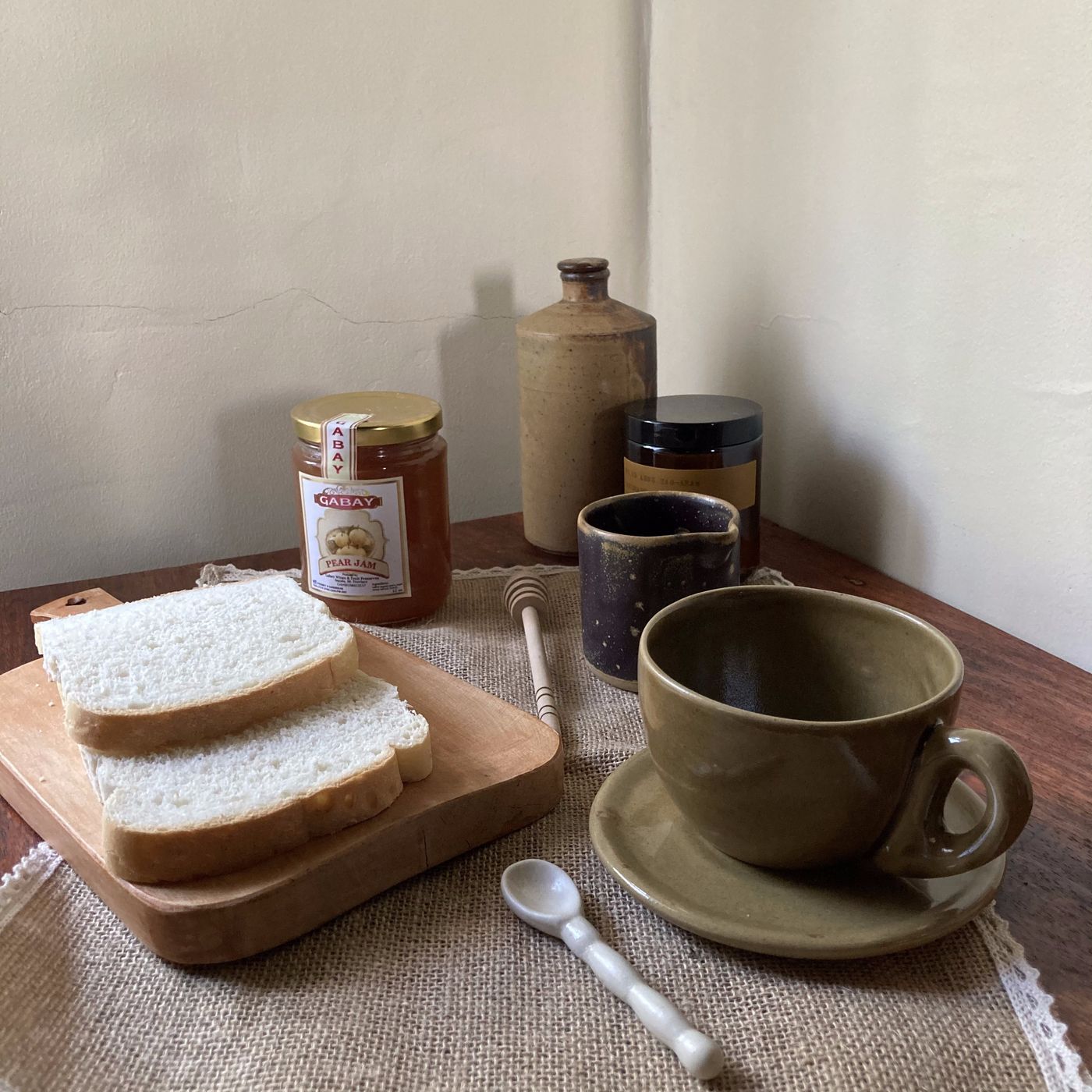
The pieces AWIS gathers are stoneware.