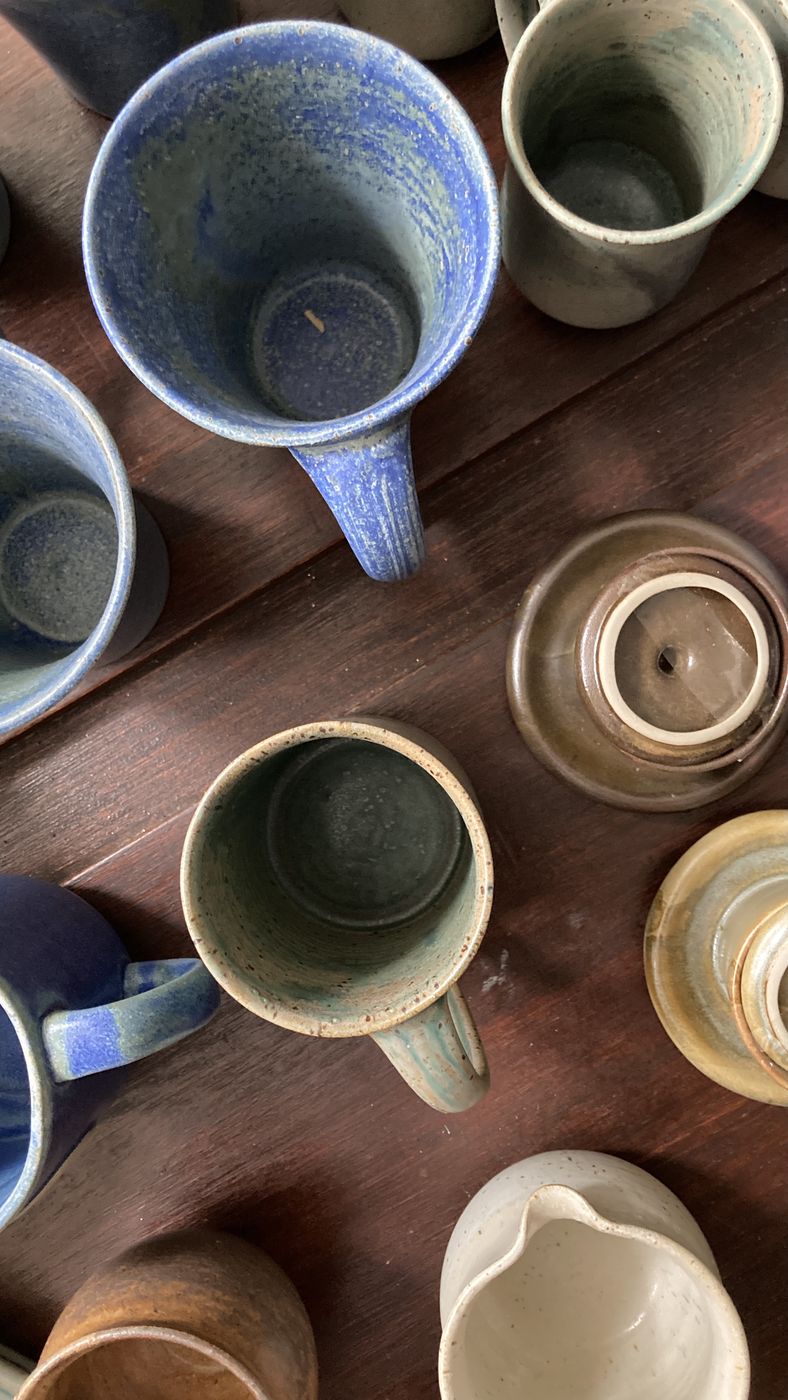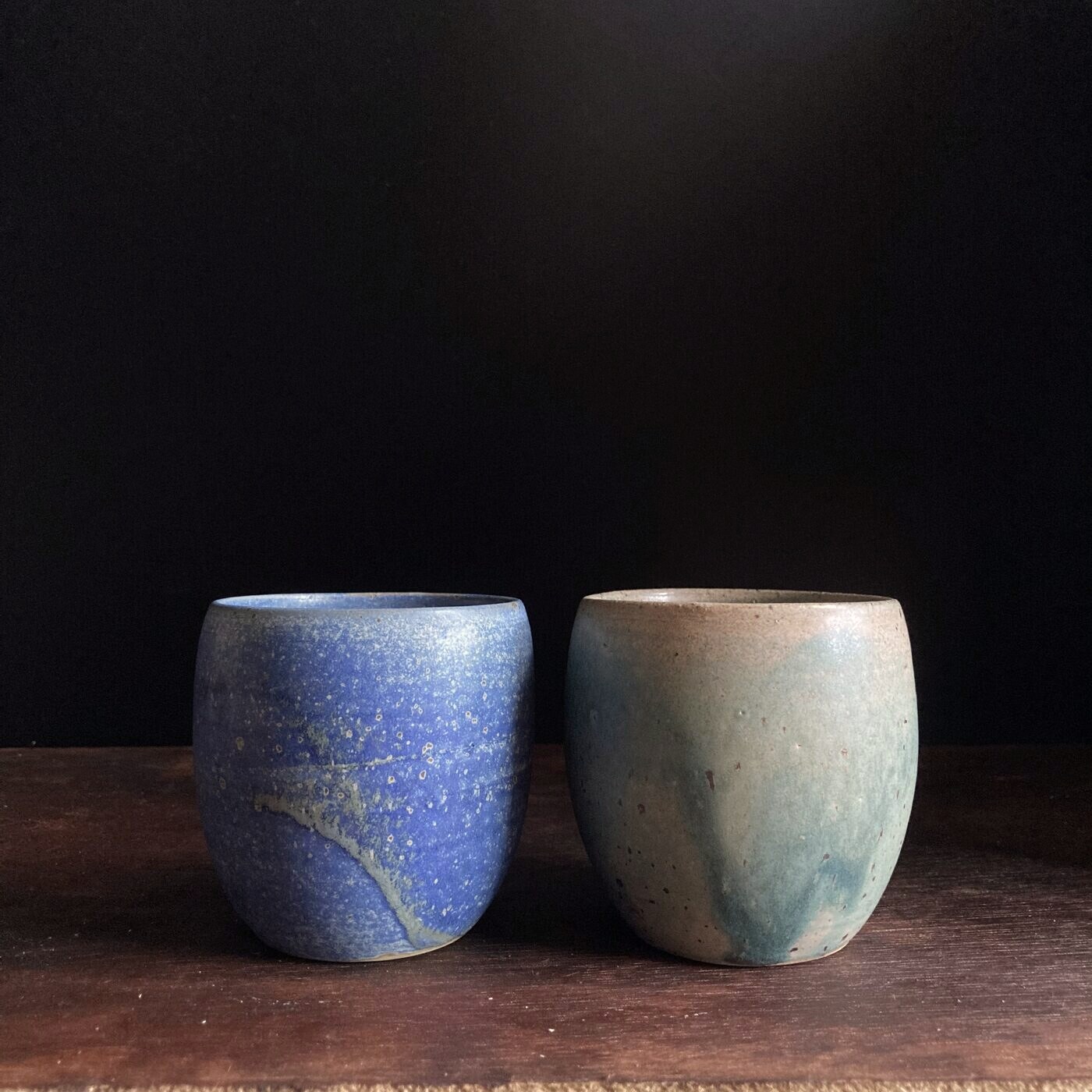
Set two cups of the same form side by side and they will not match. One may sit a millimetre taller. The glaze may run darker on one shoulder. People sometimes ask whether this is a fault. It is the opposite.
Three points where difference enters
The throwing. A piece raised on a wheel is shaped by pressure held over seconds. No two lifts are identical, so no two walls are.
The glazing. Glaze is usually applied by dipping. How long a piece stays under, how it drains, and how thickly it holds all vary by hand and by day.
The kiln. Heat is not even inside a kiln. A piece near the wall and a piece near the centre receive different atmospheres, and the same glaze can come out warmer or cooler depending on where it stood.
A matched set is a factory's promise. A close family is a maker's.
Wabi-sabi, briefly
The Japanese term wabi-sabi is often reduced to a look: rough edges, muted colour. It is closer to an attitude, an acceptance that things are weathered, incomplete and passing, and that this is where their character lives.
You do not need the word to feel it. Most people already prefer the cup with the mark on it, once they have used it a while.
What is a fault
Variation is not damage. A crack through the wall, a chip on the rim, or a foot too rough to sit flat are faults. Difference in glaze depth, small changes in height, a fingerprint in the clay: those are the record of making.
More pieces, and the studios behind them, on Instagram.