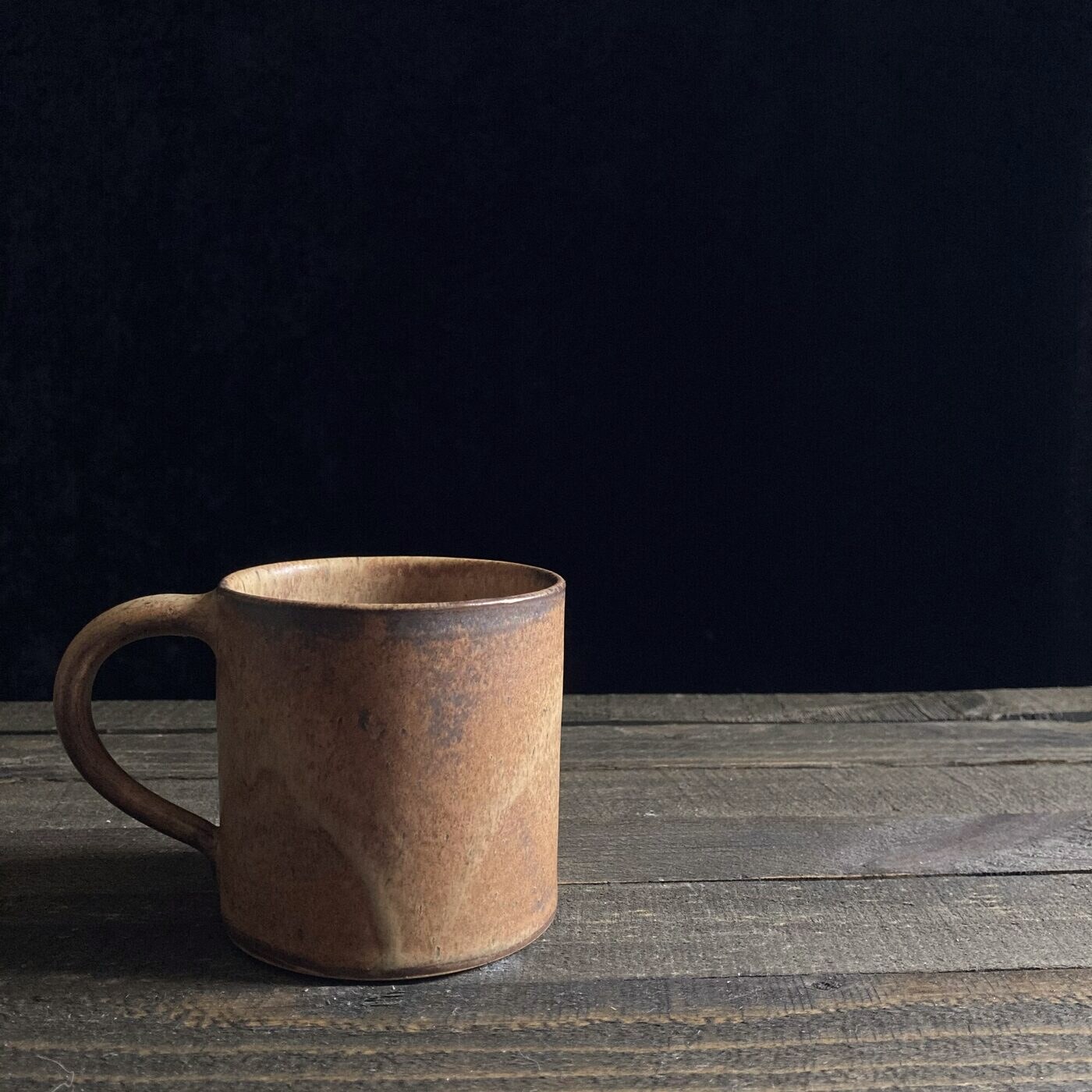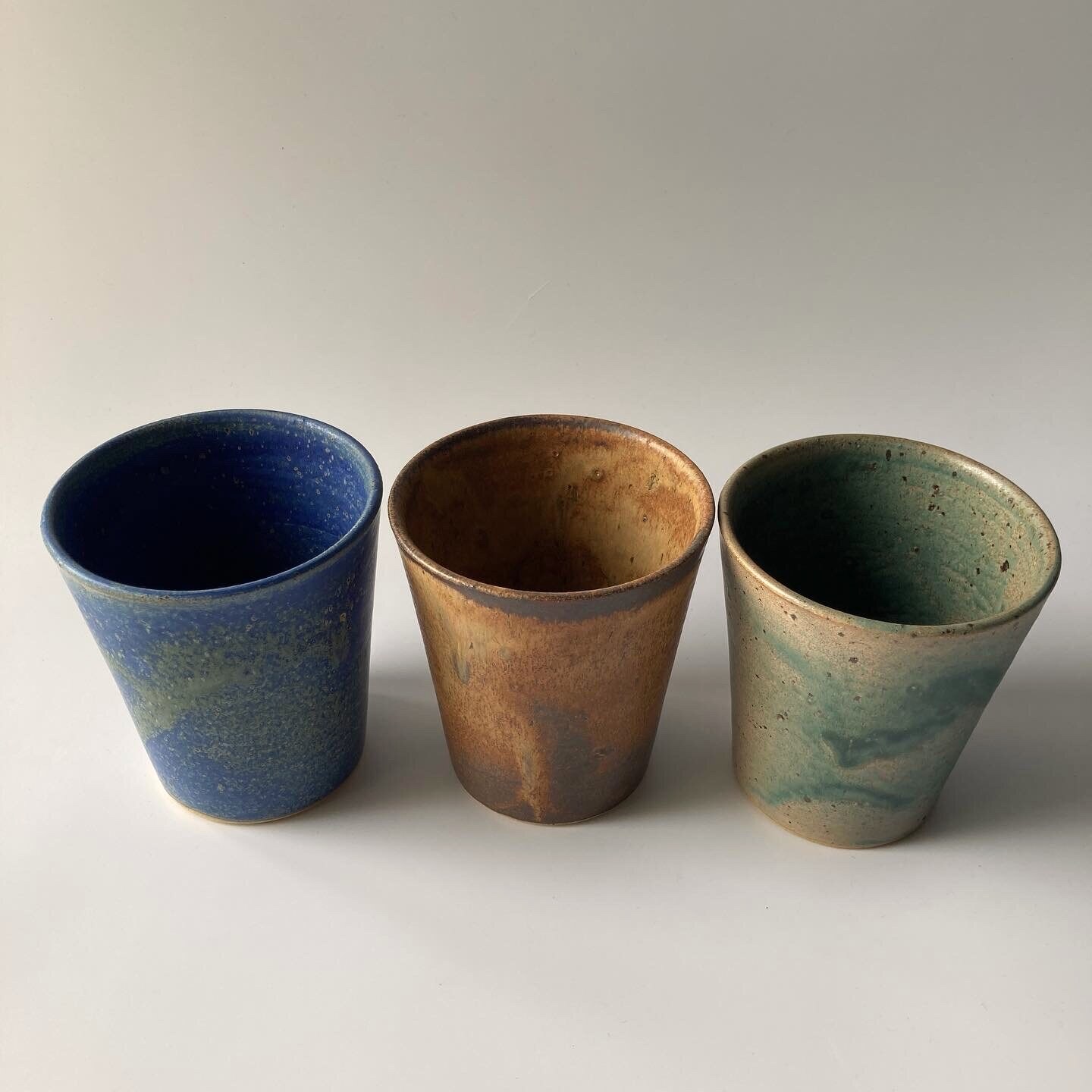
Collecting sounds like something that requires permission. It does not. It begins the first time you choose a cup on purpose.
Start with one you will use
The most common mistake is buying something too precious to touch. A piece kept in a cabinet teaches you nothing. A piece you drink from every morning teaches you how a glaze wears, how a handle sits, whether the weight was judged well.
Buy the mug. Use the mug.
What to look at
Pick the piece up. Feel where the weight sits: too heavy at the rim and it will tire the wrist. Run a thumb over the foot, the unglazed ring at the base, and check it is smooth enough not to scratch a table.
Look at where the glaze pools and breaks. On hand-thrown work the glaze is thicker in the hollows and thinner where the form turns. That variation is the record of a hand and a kiln, not a flaw.
Ask what it is made of and how it was fired. A good maker likes the question.
What to ignore
Perfect symmetry. Identical sets. A price that promises rarity rather than describing work. None of these tell you whether a piece is good.
Then keep going, slowly
A collection is not assembled in an afternoon. Add a piece when a piece is needed, or when one genuinely stops you. Buy less, choose better, keep longer.
More pieces, and the studios behind them, on Instagram.